
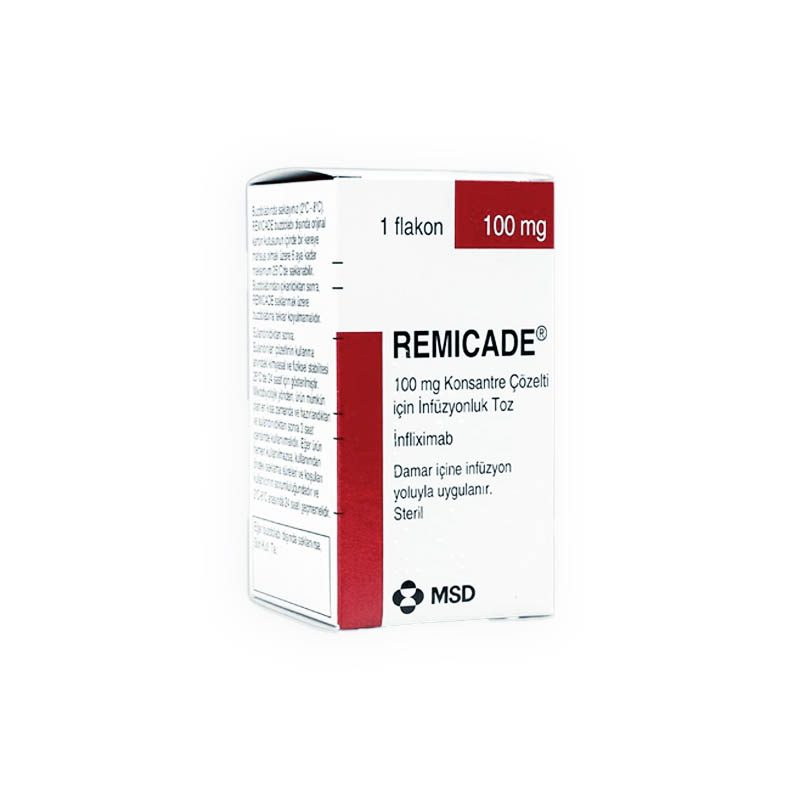
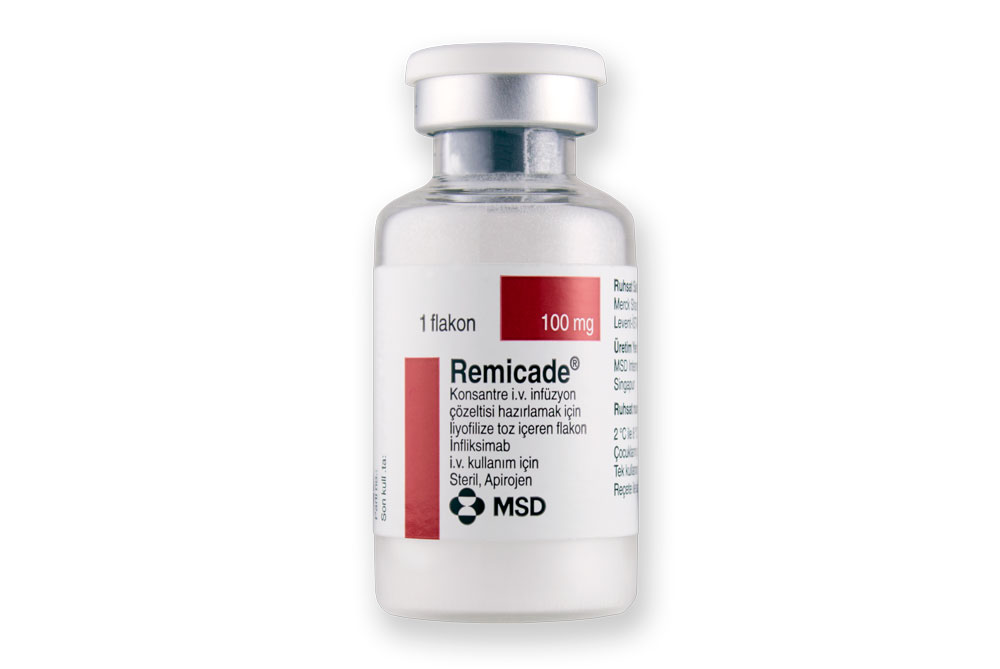
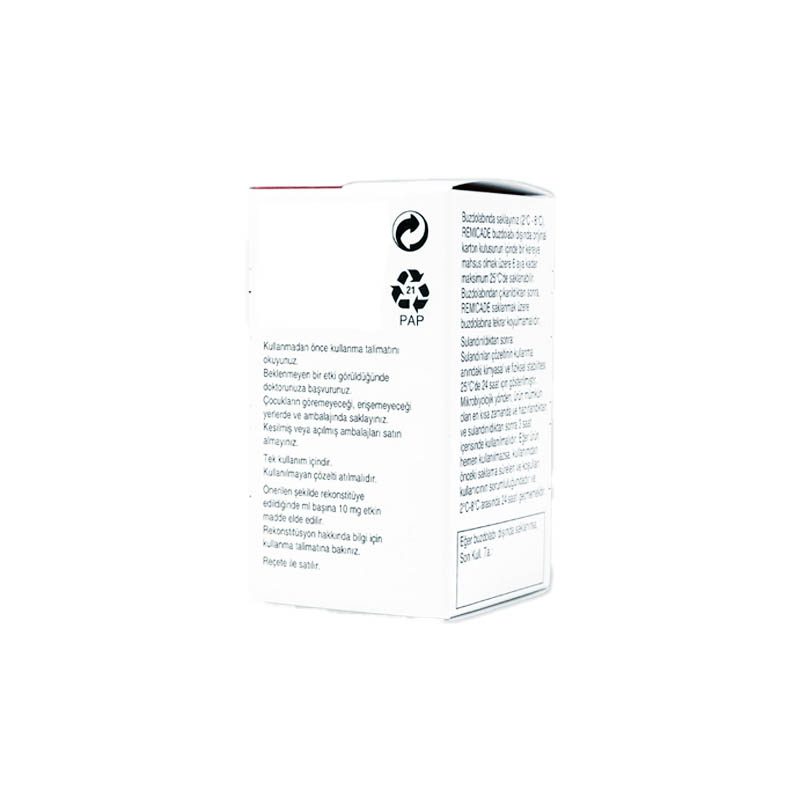



REMICADE® is a biologic anti-TNF (tumour necrosis factor-alpha) medication used for the treatment of several chronic autoimmune and inflammatory conditions. Each vial contains 100 mg of infliximab — a monoclonal antibody that helps control harmful inflammation by targeting and neutralizing TNF-α in the body. REMICADE® is administered intravenously in a clinical setting under professional supervision.
Key Features & Indications
Effective treatment option for:
• Moderate to severe rheumatoid arthritis (with methotrexate)
• Moderate to severe Crohn’s disease (adults and pediatric)
• Ulcerative colitis (adults and pediatric)
• Ankylosing spondylitis
• Psoriatic arthritis
• Moderate to severe plaque psoriasis
Can help reduce symptoms, improve physical function, and promote mucosal healing in inflammatory bowel disease
Designed for patients who do not respond adequately to conventional therapies
How It Works
Infliximab specifically binds to TNF-α — a key driver of chronic inflammation — preventing it from attaching to receptors and causing immune-mediated tissue damage. By reducing inflammatory activity, REMICADE® helps protect joints, improve intestinal health, and support overall disease control.
Ideal Candidates
Patients diagnosed with approved autoimmune conditions who require biologic infusion therapy
Individuals with inadequate response to first-line treatments
Cases where regular clinical monitoring is preferred
Administration & Packaging
Supplied as 100 mg powder in a single-use glass vial
Reconstituted and diluted for intravenous infusion
Dosing is weight-based and scheduled at induction and maintenance intervals
Infusions must take place in a clinical environment equipped for monitoring
Possible Side Effects & Considerations
Increased susceptibility to infection due to immune suppression — screening (e.g., TB, hepatitis) required
Infusion-related reactions can occur; pre-medication may be recommended
Rare risks include certain malignancies, demyelinating disorders, and liver function abnormalities
Live vaccines should generally be avoided during treatment
Continuous clinician assessment is necessary to evaluate safety and response
$529.00 – $549.00Price range: $529.00 through $549.00
| Packs | For each |
|---|---|
| 1-5 Packs | $549.00 |
| 6-10Packs | $539.00 |
| 11-20Packs | $534.00 |
| 21+Packs | $529.00 |